Why Hire a Professional Shrink Wrap Boat Service?
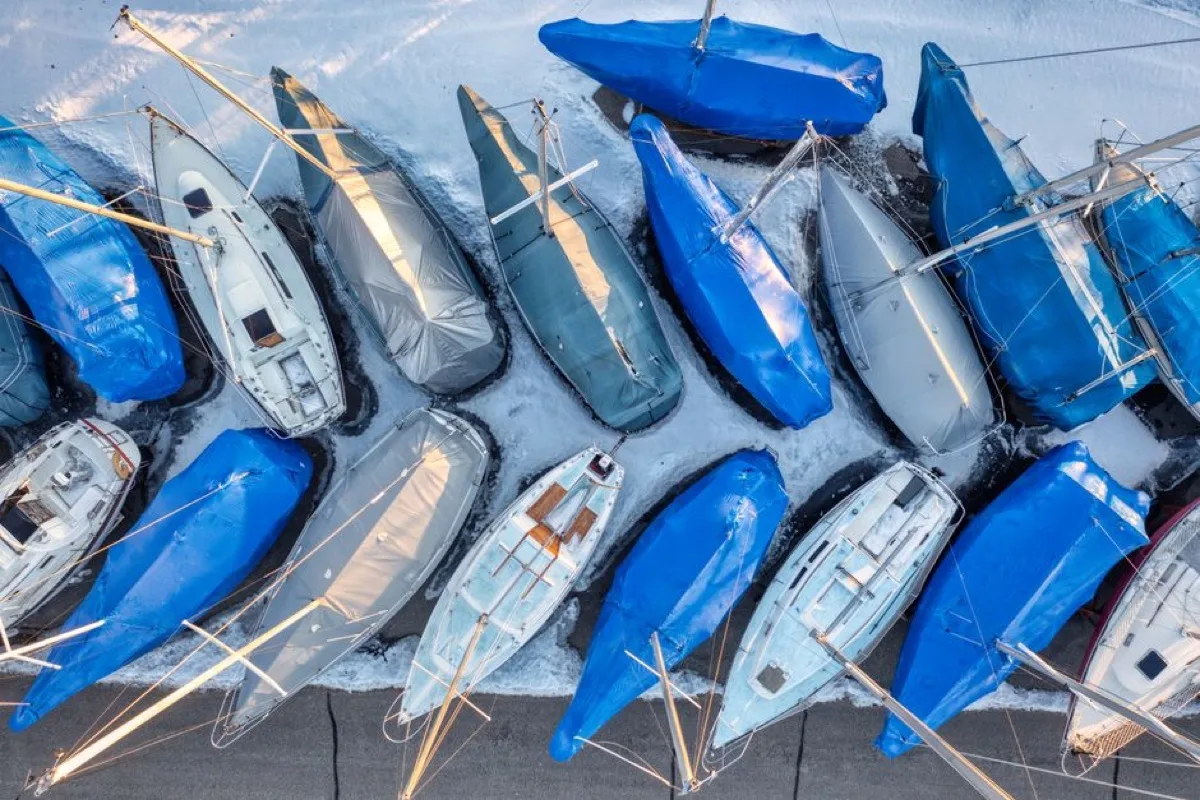
A professional shrink wrap boat service covers your boat with marine-grade film, then heats it for a snug fit. To find the right provider, ask whether the quote includes support framing, vents, on-site installation, and spring removal. Confirm whether winterization is a separate service: wrap helps keep out rain, snow, and debris, but it does not protect an engine or plumbing from freezing.
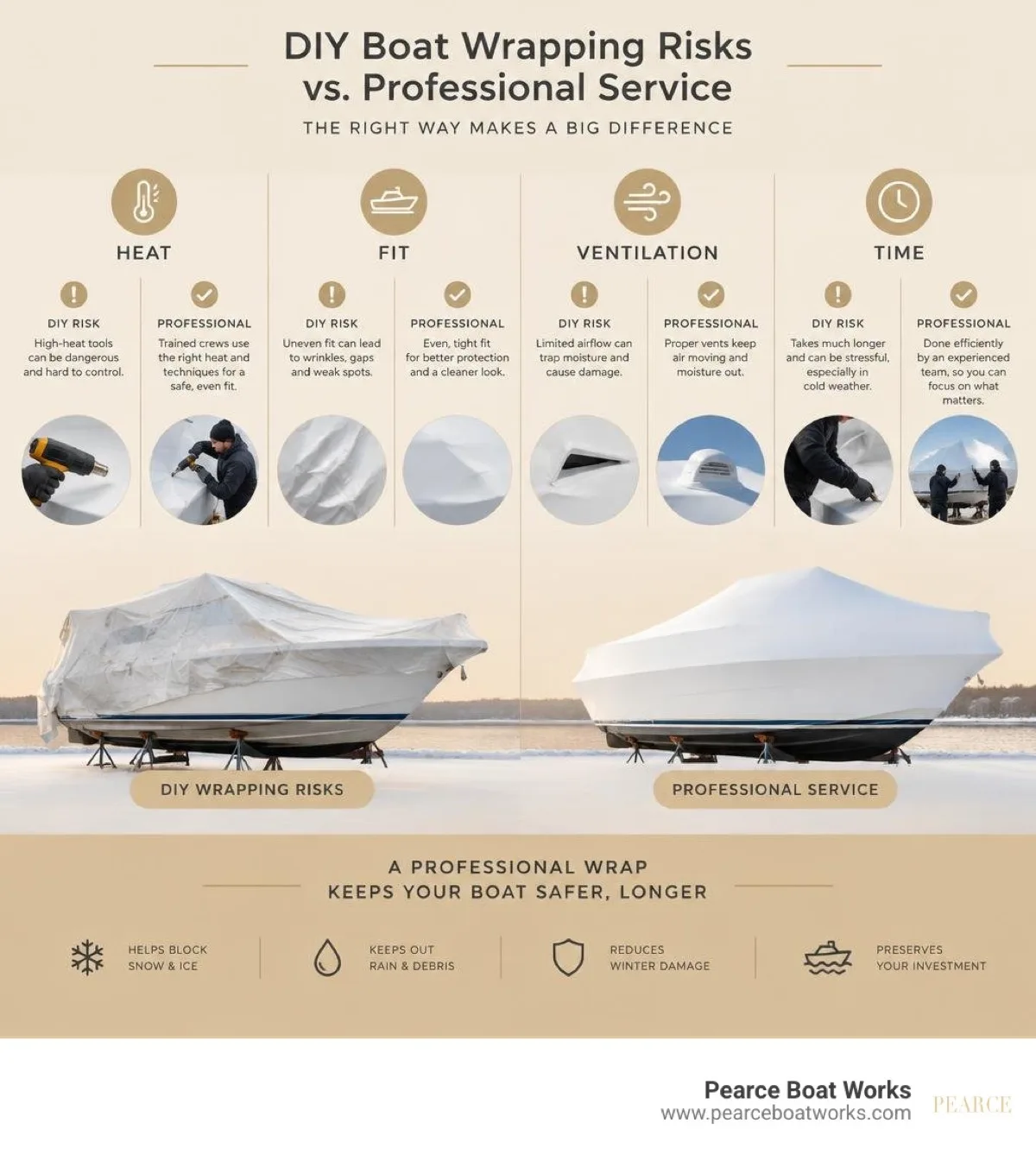
Doing it yourself means buying materials and working with a high-heat tool around your boat. A trained crew can handle the fit and the heat, giving you one less winter job to worry about. According to the BoatUS Foundation, proper off-season covering is one of the most effective ways to prevent freeze-related damage and interior moisture problems.
Why Investing in a Professional Shrink Wrap Boat Service Protects Your Vessel
When the boating season winds down, safeguarding your vessel from harsh freeze-thaw cycles, coastal storms, and heavy precipitation is essential. Marine facilities widely recommend shrink wrapping for vessels, as professional protective wrapping can reduce winter damage costs by up to 30%. While traditional tarps flap in the wind, pool water, and tear at the grommets, a continuous plastic shell acts as an impenetrable shield across the entire deck and superstructure.
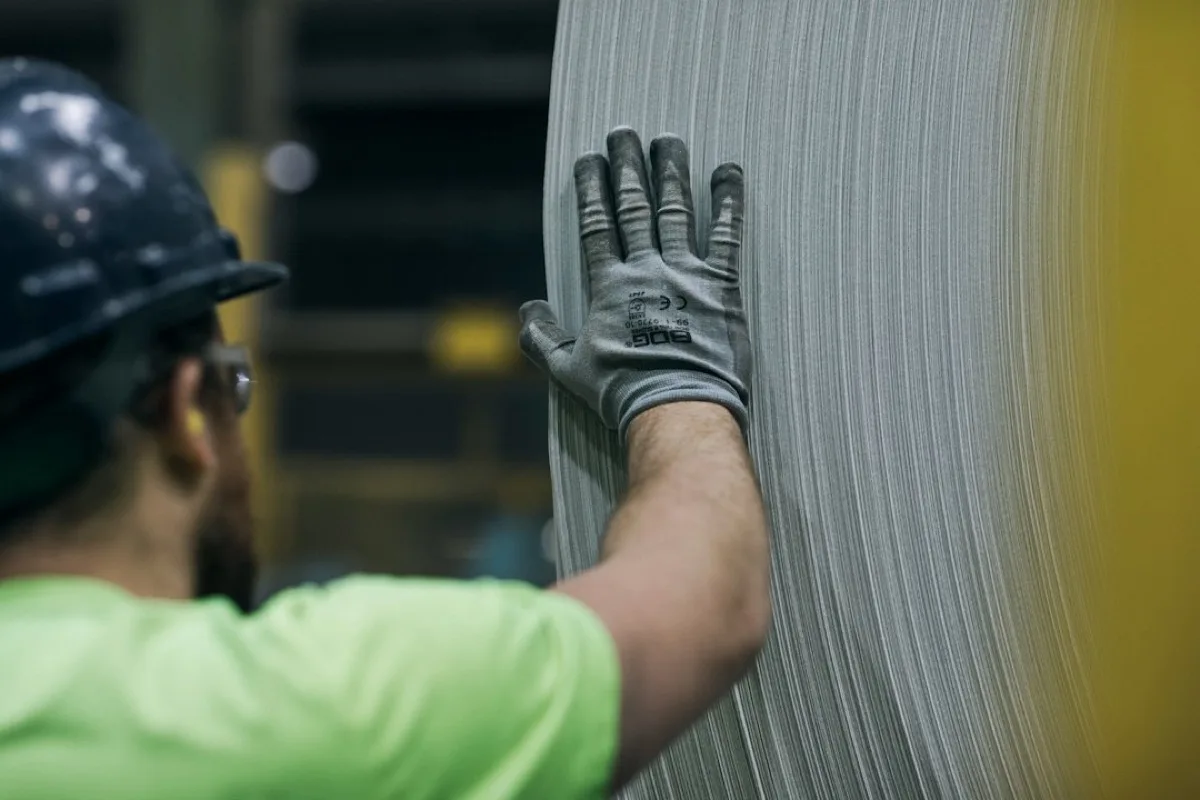
At Pearce Boat Works, we use durable, marine-grade polymer films ranging from 7 to 8 mil in thickness. Unlike standard construction plastics, premium marine wrap incorporates specialized UV inhibitors to stop solar degradation over long months of exposure. When heated properly, the wrap contracts to form a drum-tight barrier capable of shedding heavy snow loads and standing up to gale-force winter winds. For an in-depth breakdown of seasonal boat prep, check out our practical guide to boat shrink wrapping for winter storage.
Eliminating Moisture, Mold, and Mildew
Sealing a vessel tightly against rain and snow solves only half the winter storage equation. Without proper internal climate control, natural temperature fluctuations create interior condensation, turning your cabin and cockpit into a greenhouse for mold and mildew.
To maintain healthy airflow, professional installers position passive louver vents strategically across the high and low points of the tented frame. This creates a natural chimney effect, circulating fresh air while preventing rain or snow from blowing inside. We also install hanging desiccant bags and moisture-absorbing packets throughout enclosed spaces to capture airborne dampness, keeping upholstery, headliners, and teak clean and dry until spring launch.
Environmental Responsibility and Wrap Recycling
Because marine shrink wrap is a single-use protective film replaced each season, responsible disposal matters. Quality marine film is composed of low-density polyethylene \\(LDPE \\#4\\), a highly recyclable material that should never end up in a local landfill.
Professional marine yards collect, bundle, and send used seasonal film to specialized recycling processors where it is re-pelletized for use in industrial plastic products, agricultural sheeting, and construction barriers. When you work with an experienced team, spring unwrapping includes eco-friendly disposal and material recycling, giving you complete seasonal protection with a minimal environmental footprint.
Professional Installation vs. DIY: Why Doing It Yourself Backfires
At first glance, shrink wrapping looks straightforward: lay out some plastic, strap it down, and wave a heat gun. In practice, boat wrapping is a skilled trade requiring precise heat management, structural carpentry, and proper safety protocols.
The primary tool for shrinking marine film is a high-output, specialized propane heat torch producing hundreds of thousands of BTUs. In inexperienced hands, this tool presents serious hazards. Holding the torch a fraction of a second too long in one spot will scorch gelcoat, melt expensive canvas, burn through graphics, or even ignite underlying materials.
Beyond fire risks, achieving uniform, drum-tight tensioning requires balanced strapping tension. If the wrap is loose, it will puddle water, collect heavy snow, and flap against the hull until it chafes the clear coat.
Feature | Professional Service | DIY Wrapping ---|---|--- Material Quality | 7-8 mil virgin marine-grade film with UV blockers | Often 6 mil or non-UV agricultural plastic Equipment Safety | Commercial propane heat tools operated by trained technicians | Rental torches or electric heat guns with uneven heat Structural Frame | Custom-built 2x4 wooden posts & woven strapping grid | Improvised framing prone to snow-load collapse Ventilation | Passive louver vents & moisture-absorbing desiccants | Often omitted, leading to interior mold & mildew Work Time | Typically completed in a few hours by a dedicated crew | 1–2 full days of labor, trial, and error Liability & Risk | Insured work with guaranteed fit and weather protection | Full personal liability for burns, collapses, or hull damage
The True Cost of Equipment, Materials, and Time
Boaters who attempt a DIY wrap to save money often discover that initial investments wipe out any projected savings. To wrap a boat correctly, you must purchase:
* A dedicated marine propane heat torch kit and regulator * Heavy-duty woven polyester strapping reels and tensioning tools * Rolls of 7-mil or 8-mil marine shrink film * Heat-resistant safety gloves and protective gear * Specialty shrink-wrap tape and end-cap post protectors * Louver vents, desiccant bags, and 2x4 framing lumber
Factoring in the cost of unused leftover material, tool purchases, and an entire weekend spent balancing on ladders, doing it yourself quickly becomes an expensive headache.
The Step-by-Step Application Process and Owner Preparation
A secure shrink wrap installation relies on the support structure beneath the plastic. Without proper framing, the best film in the world will sag under snow loads.
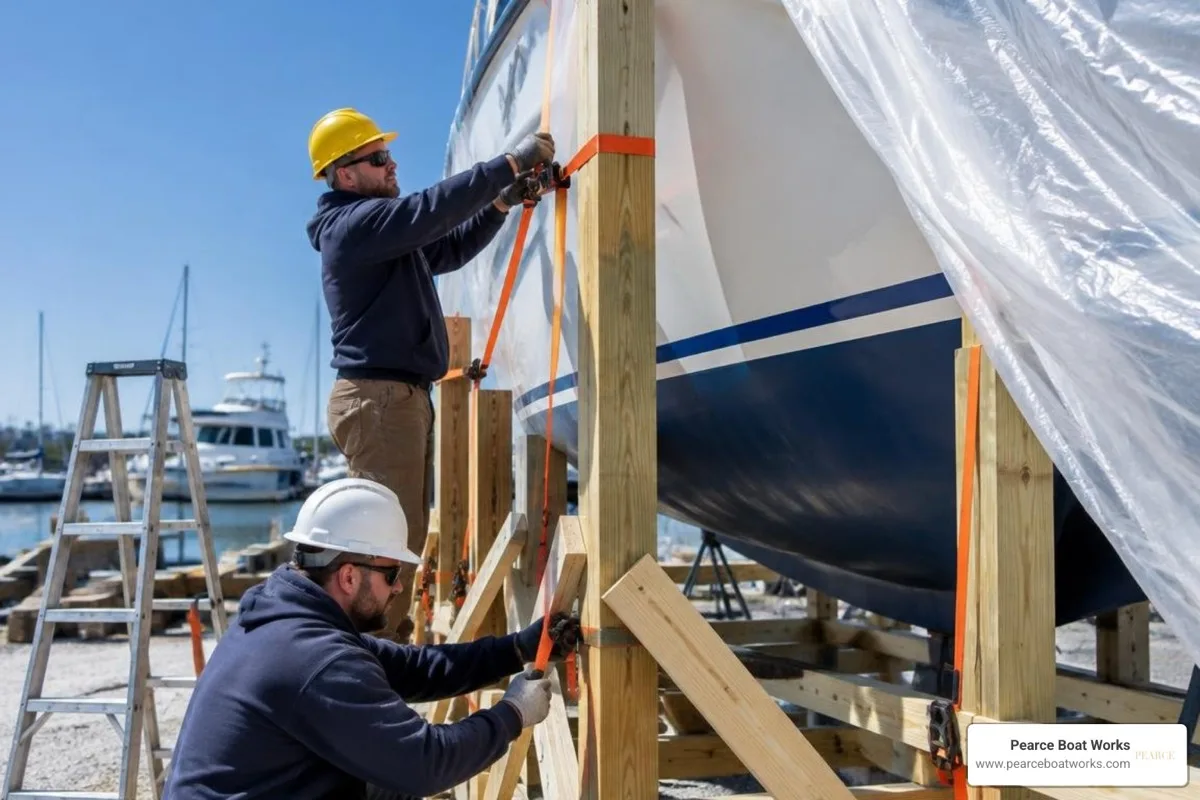
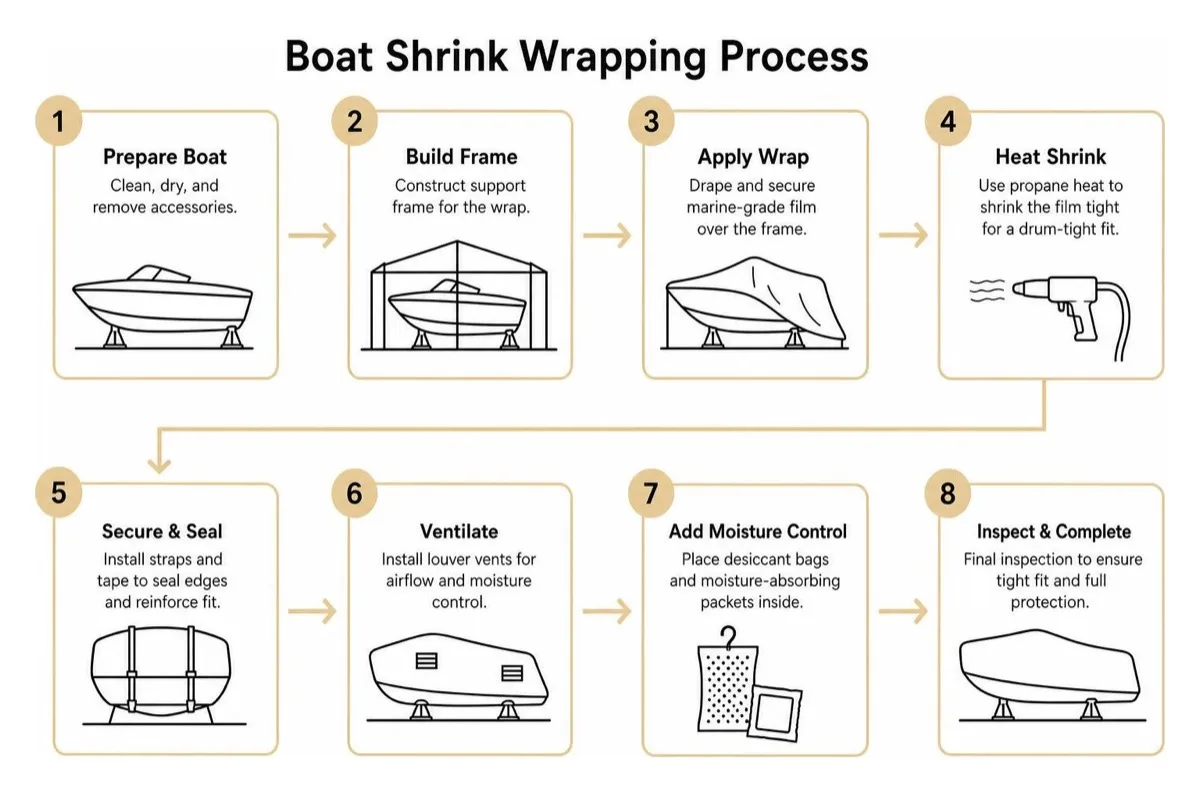
1. Building the Backbone: Technicians build an internal wooden support skeleton using 2x4 upright posts topped with protective end caps. 2. Strapping Grid: High-tensile woven strapping runs from bow to stern, creating a pitched ridge beam, and cross-straps extend to the perimeter to form a snow-shedding roof. 3. Padding Vulnerable Points: Sharp hardware, rod holders, outriggers, cleats, and windshield corners are padded with foam or specialty tape to prevent punctures. 4. Perimeter Band Installation: A heavy-duty belly band is tensioned around the hull just below the rub rail or down toward the waterline. 5. Draping and Trimming: The marine film is centered over the boat, draped evenly, and trimmed with safety cutters. 6. Pleating and Tacking: The excess film is wrapped under the perimeter band and heat-welded back onto itself. 7. Controlled Heat Shrinking: Starting at the bottom perimeter and working up toward the center peak, the technician applies steady, sweeping heat to shrink the film evenly. 8. Venting and Access: Louver vents are cut into the film, moisture bags are placed inside, and optional zipper doors are installed.
What to Expect During a Professional Shrink Wrap Boat Service
Whether you arrange mobile dockside service, lift-side installation, or yard storage, a professional team works efficiently to minimize downtime. From compact bowriders to large sportfishers, our crew handles custom contours, radar arches, and tall center consoles. If you need periodic cabin access during the off-season, technicians can weld heavy-duty zippered access doors into the film, allowing you to run winter inspections without compromising weather protection.
How Boat Owners Should Prepare Before Service
To help your service technician deliver the cleanest, tightest wrap possible, take a few simple prep steps:
* Clean and Dry the Deck: Wash away salt, fish residue, dirt, and leaves. Ensure carpets and decks are dry to reduce interior humidity. * Remove Valuables and Loose Gear: Take home life jackets, electronics, dock lines, food, and personal gear. * Stow Canvas and Cushions: Remove snap-on canvas covers, Bimini tops, and vinyl cushions so moisture cannot become trapped between surfaces. * Drain Bilges and Livewells: Pump out remaining water from livewells, fish boxes, and bilges to prevent freeze damage. * Stabilize Fuel: Add marine fuel stabilizer to your fuel tank and run the engine briefly so treated fuel circulates through lines and injectors.
Cost Factors, Logistics, and Combining Winterization Services
Shrink wrap service pricing varies by boat size, configuration, and storage location. Large vessels with wide beams or tall bridges carry the highest quotes, because they need the most framing, film, and crew time.
Many providers use tiered, per-foot pricing based on overall length. For example, smaller hulls up to 18 feet generally start around a base per-foot rate, boats between 19 and 25 feet fall into a mid-tier per-foot bracket, and vessels over 25 feet require heavier gauge film, extended framing, and custom ladder work.
Key Factors Influencing Shrink Wrap Boat Service Pricing
* Overall Length and Beam Width: Wider boats require wider film rolls \\(up to 32 feet wide or more\\) and extra center support poles. * T-Tops, Towers, and Arches: Wakeboard towers, radar domes, outriggers, and flybridges require custom framing and additional labor. * Access Hatches and Zipper Doors: Adding re-usable zipper doors adds a small material and labor fee. * Mobile vs. Yard Service: On-site mobile services may include a standard service call fee depending on travel distance.
Bundling Shrink Wrap with Winterization and Storage
Wrapping protects the outside of your vessel, but your mechanical systems need internal freeze protection. Bundling shrink wrap with professional winterization saves time, consolidates your service schedule, and ensures comprehensive winter coverage.
A complete winter package typically includes:
* Flushing raw water cooling passages and adding non-toxic marine antifreeze * Fogging internal engine cylinders with protective storage oil * Changing engine oil, fuel filters, and lower unit gear lube * Winterizing onboard fresh water systems, heads, and air conditioning units * Inspecting trailer bearings, brakes, and bunks prior to off-season lay-up
For ongoing maintenance advice, visit our marine maintenance blog to stay ahead of off-season service needs.
Frequently Asked Questions About Boat Shrink Wrapping
How long does professional shrink wrap last during winter?
Marine-grade shrink wrap is formulated to last the entire off-season, typically between 6 to 9 months, without deteriorating. Thanks to built-in UV inhibitors and high tear resistance, high-quality 7-mil and 8-mil film holds up reliably against winter blizzards, freezing rain, and high coastal winds until spring commissioning.
Can my boat be shrink wrapped while still in the water or on a lift?
Yes. While many boats are wrapped on trailers or storage blocks on land, experienced technicians can wrap boats moored dockside or kept on residential boat lifts. The perimeter strapping is tied off securely near the waterline or under the rub rail, providing a tight, water-shedding seal while the vessel stays in place.
Can I access the interior of my boat after it has been wrapped?
Yes. Technicians can install heavy-duty zippered access doors anywhere on the wrap. These doors tape directly to the film and allow you to step aboard for mid-winter inspections, equipment checks, or maintenance without compromising the weather seal.
Protect Your Investment with Pearce Boat Works
Leaving your boat exposed to winter weather risks costly damage from snow buildup, gelcoat weathering, and interior mold. While tackling the job yourself might seem tempting, the fire risks, material costs, and structural challenges make professional installation the smarter, safer choice.
At Pearce Boat Works in Amityville, NY, our in-house master mechanics and dedicated yard crew deliver dependable craftsmanship across every project—from mechanical winterization and electronics rigging to custom finishes and precision shrink wrapping. We construct strong, weather-resistant support frames, apply premium marine film, and ensure proper ventilation so your boat stays pristine all winter long.
Contact our team today to schedule your winter storage and shrink wrap services, or submit an online service request to prepare your boat for the cold season ahead.