Boat Winterization Antifreeze: Start With the Water That Can Freeze
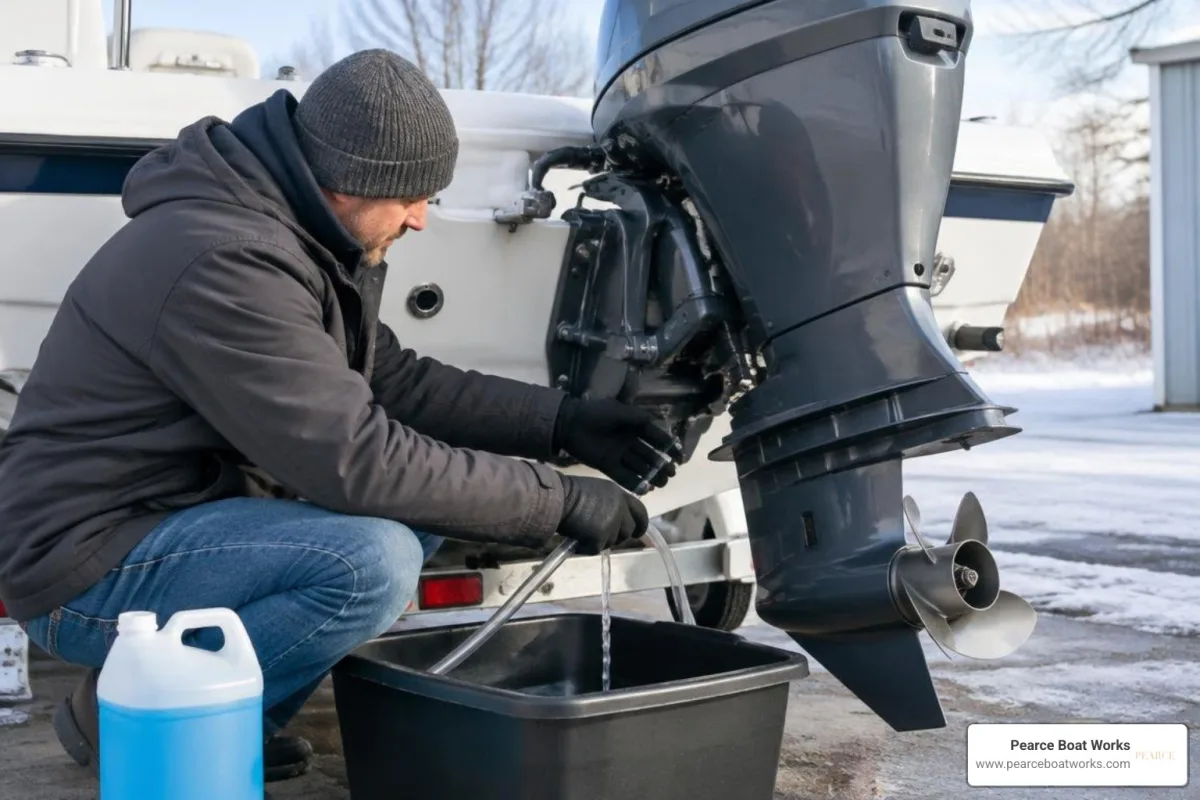
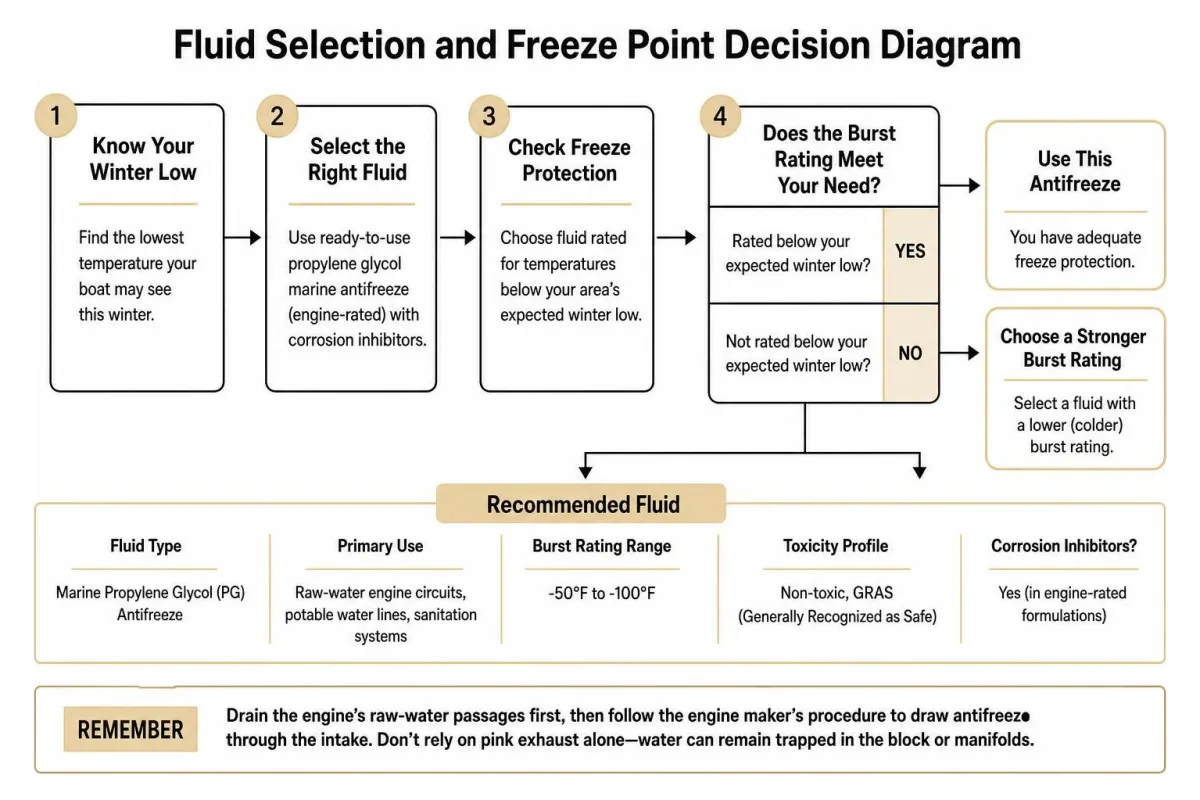
Choose a ready-to-use, propylene glycol marine antifreeze rated for temperatures below your area's expected winter low. Drain the engine's raw-water passages first, then follow the engine maker's procedure to draw antifreeze through the intake. Don't rely on pink exhaust alone: water can remain trapped in the block or manifolds. Drain and bypass the water heater before treating freshwater lines, and collect used fluid rather than letting it reach the water.
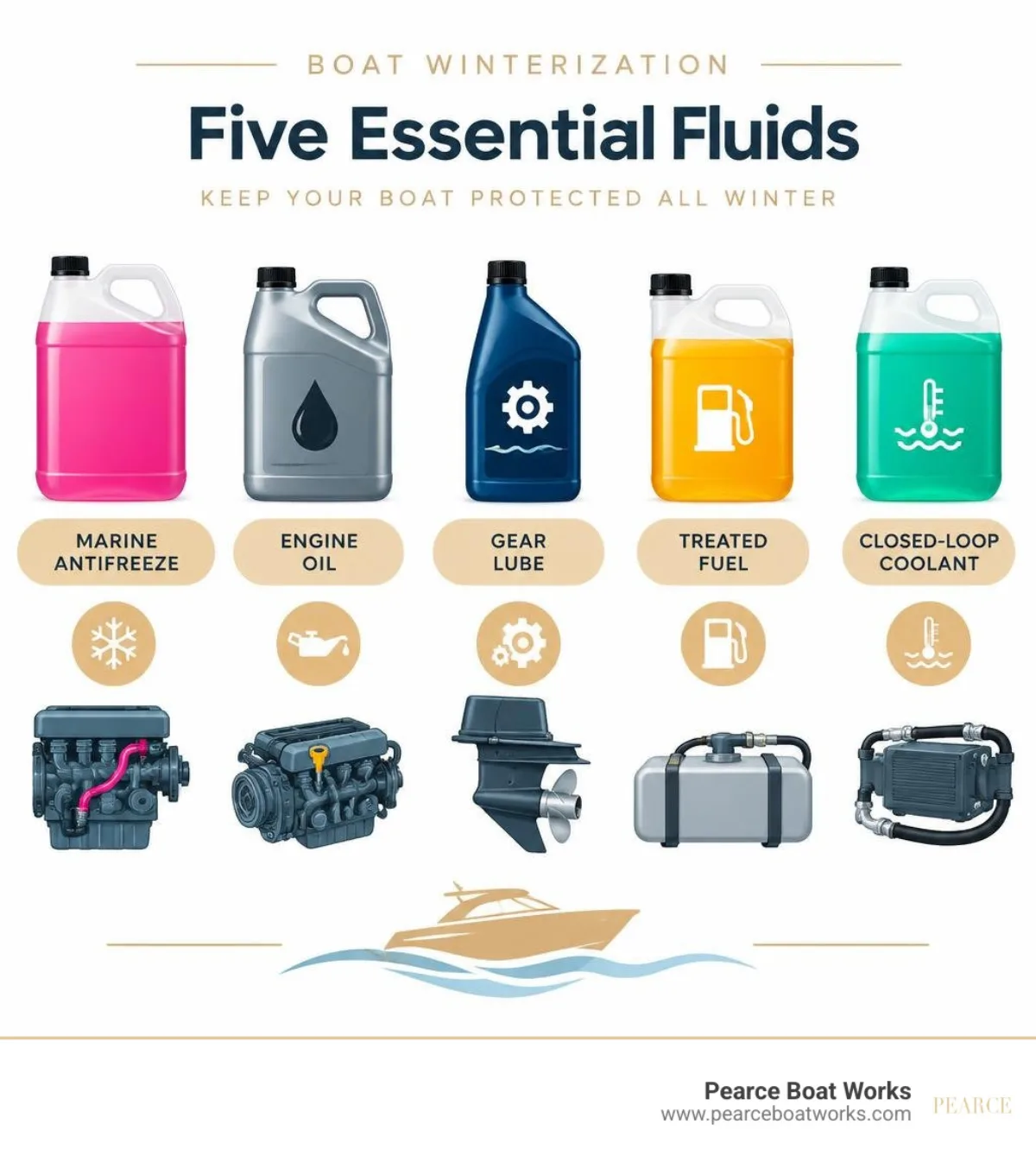
Antifreeze is only one of five fluids to check before winter storage. Change the engine oil and gear lube, treat the fuel, and test the closed-loop coolant if your boat has one. The stakes are high: water expands about 9% when it freezes, and replacing a cracked mid-size inboard engine block can cost thousands of dollars. The steps below show what to use and where to check before your boat is laid up.
When winter arrives on the South Shore of Long Island, any trapped water inside your engine, domestic plumbing, or sanitation circuits turns into expanding ice. That 9% volume expansion generates thousands of pounds of pressure per square inch. An untreated cooling passage can easily split a cast-iron exhaust manifold \\(an $800 to $2,500 repair\\) or completely crack an engine block \\($3,000 to $9,000 in parts and labor\\).
Taking care of your systems ahead of sub-zero temperatures protects your investment, eliminates costly spring surprises, and keeps your vessel in prime condition. Here is our complete master mechanic’s guide to selecting, sizing, and flushing every vital fluid before the hard freezes hit.
1\. Selecting and Sizing Your Boat Winterization Antifreeze
Choosing the right fluid requires understanding how different antifreeze formulations perform under sub-freezing temperatures. Many boaters assume all pink jugs on the shelf provide identical protection, but chemical composition and concentration dictate whether your boat remains safe or suffers severe freeze damage.
Antifreeze Chemistry Comparison
Fluid Type | Base Chemistry | Primary Use Case | Burst Rating Range | Toxicity Profile | Corrosion Inhibitors Included? ---|---|---|---|---|--- Marine Propylene Glycol \\(PG\\) | Propylene Glycol | Raw-water engine circuits, potable water lines, sanitation systems | -50°F to -100°F | Non-toxic, GRAS \\(Generally Recognized as Safe\\) | Yes \\(in engine-rated formulations\\) Automotive Ethylene Glycol \\(EG\\) | Ethylene Glycol | Closed-loop engine cooling systems only | -34°F to -60°F \\(at 50/50 mix\\) | Highly toxic to mammals and aquatic wildlife | Yes \\(heavy-duty automotive package\\) Budget RV Antifreeze | Ethanol / Alcohol Blend | Cheap domestic plumbing blowouts | -50°F | Low toxicity, but combustible & dries rubber seals | Rare / minimal
Never dilute pre-mixed marine antifreeze with water. Marine antifreeze is formulated to be used straight out of the bottle. If you introduce it into an engine block or plumbing line that already contains standing water, the effective concentration drops rapidly. For accurate quality control, measure the mixture using an optical refractometer rather than a floating-ball tester \\(which is calibrated strictly for automotive ethylene glycol\\). A refractometer allows you to confirm that the discharge fluid matches the bottle's virgin freeze rating.
Propylene Glycol vs. Ethylene Glycol in Boat Winterization Antifreeze
The debate between propylene glycol and ethylene glycol comes down to safety, chemical compatibility, and application:
* Propylene Glycol \\(PG\\): The industry standard for seasonal raw-water flushes and plumbing lines. It is non-toxic, odorless, tasteless, and biodegradable. High-grade marine PG formulas feature corrosion inhibitors that protect copper, brass, aluminum, and cast iron without damaging neoprene water pump impellers. * Ethylene Glycol \\(EG\\): While it is an effective closed-loop heat transfer fluid, EG is extremely toxic to pets, wildlife, and humans. It should never enter a boat's potable water lines, and raw-water engine discharge containing EG violates environmental discharge laws.
For domestic freshwater systems, you must use safe, non-toxic formulations designed specifically for drinking systems, following established potable water winterization guidelines to keep your lines clean and safe for spring commissioning.
Temperature Ratings and Gallon Requirements for Potable Water and Sanitation
Antifreeze labels display burst ratings , not the temperature at which the liquid turns to slush. A bottle of -50°F propylene glycol will start to form a slushy gel around +10°F to +13°F. This slush does not expand outward against pipe walls, so it protects copper pipes from bursting down to -50°F. However, because pockets of residual water inside your boat dilute the antifreeze, we strongly recommend using -100°F rated fluid in colder climates or when winterizing raw-water circuits that cannot be completely drained.
For freshwater lines, you must drain and bypass the water heater tank before introducing antifreeze. Leaving the water heater in the loop wastes 6 to 11 gallons of antifreeze just to fill the tank, and hot-water heating elements can burn out if energized while dry or fouled with glycol residue. For detailed, plumbing-specific steps, review step-by-step freshwater system winterizing procedures before pumping fluid through your galley and head fixtures.
2\. Crankcase Oil, Gear Lube, and Secondary Winterization Fluids
Winter layup is about more than just freeze-proofing raw water lines. Leaving degraded operating fluids inside your powertrain over the winter creates silent corrosion that damages bearings, gears, and hydraulic systems. Incorporating these fluid changes into your routine seasonal maintenance ensures your propulsion package stays protected year-round.
Engine Oil and Filter Replacement Before Layup
Used crankcase oil contains a mixture of moisture condensation, unburnt fuel, carbon soot, and acidic combustion byproducts. If left in the crankcase over a multi-month layup, these acids etch bearing surfaces, cylinder walls, and piston rings.
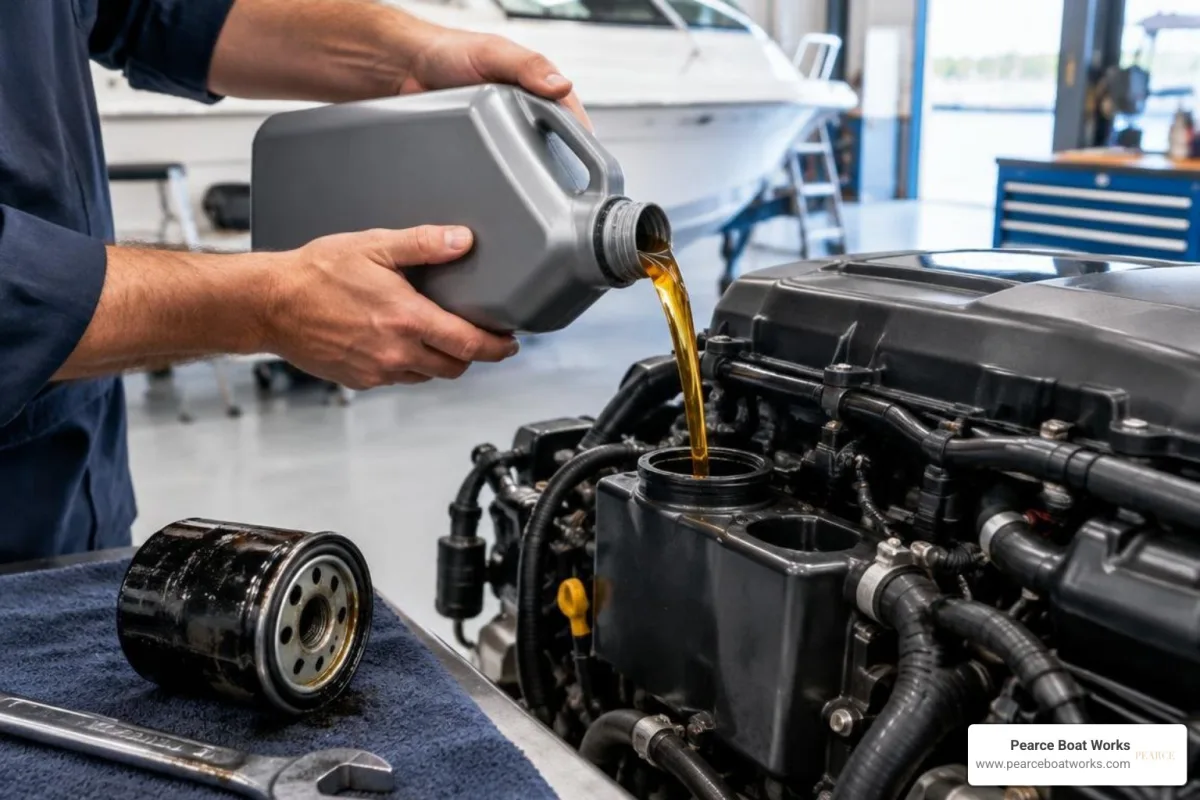
1. Warm the Engine: Run the engine on fresh water or in-slip to bring the oil to operating temperature \\(this suspends contaminants and thins the oil for complete extraction\\). 2. Extract Old Oil: Use a vacuum extraction pump through the dipstick tube or drain from the oil pan plug. 3. Replace Filter: Spin off the old filter, lubricate the new gasket with clean oil, and install it to manufacturer torque specifications. 4. Fill with Fresh Marine Oil: Refill with manufacturer-recommended four-stroke marine engine oil \\(e.g., NMMA FC-W certified\\) containing anti-corrosion additives designed specifically for marine layup. 5. Fog the Cylinders: While the engine is running its final fuel stabilization cycle, spray marine fogging oil into the intake carburetor/throttle body, or pull the spark plugs and spray fogging oil directly into the cylinders, turning the crankshaft by hand to coat the cylinder walls.
Lower Unit Gear Lube and Hydraulic Fluid Service
Outdrives and outboard lower units live submerged in water. Draining and inspecting the lower unit gear lubricant every autumn is essential:
* Inspecting for Water Intrusion: Crack open the lower drain plug and catch the first few ounces of gear lube in a clean pan. If the oil runs black or dark amber, the seals are intact. If it comes out milky, frothy, or white-streaked , water has penetrated the prop shaft or driveshaft seals. If left over winter, this trapped water settles, freezes, and cracks the gearcase casting. * Refilling from the Bottom Up: Always pump fresh marine gear lube inward through the bottom drain hole until it emerges without air bubbles from the upper vent hole, then install the upper plug before removing the pump adapter. * Hydraulic Systems & Trim Rams: Inspect trim/tilt reservoirs, power steering fluids, and trim tab pumps. Wipe ram shafts clean and coat exposed chrome with marine corrosion barrier spray. * Closed-Loop Engine Coolant: For engines with closed cooling systems \\(heat exchangers\\), test the ethylene glycol coolant with a refractometer to verify it retains a true freeze protection point of -34°F or lower.
3\. Step-by-Step Guide to Flushing Engines and Plumbing Systems
Flushing raw-water engine passages requires methodical execution. Simply pouring antifreeze into an intake hose without opening the thermostat or draining the block can dilute the fluid and leave water trapped inside the engine.
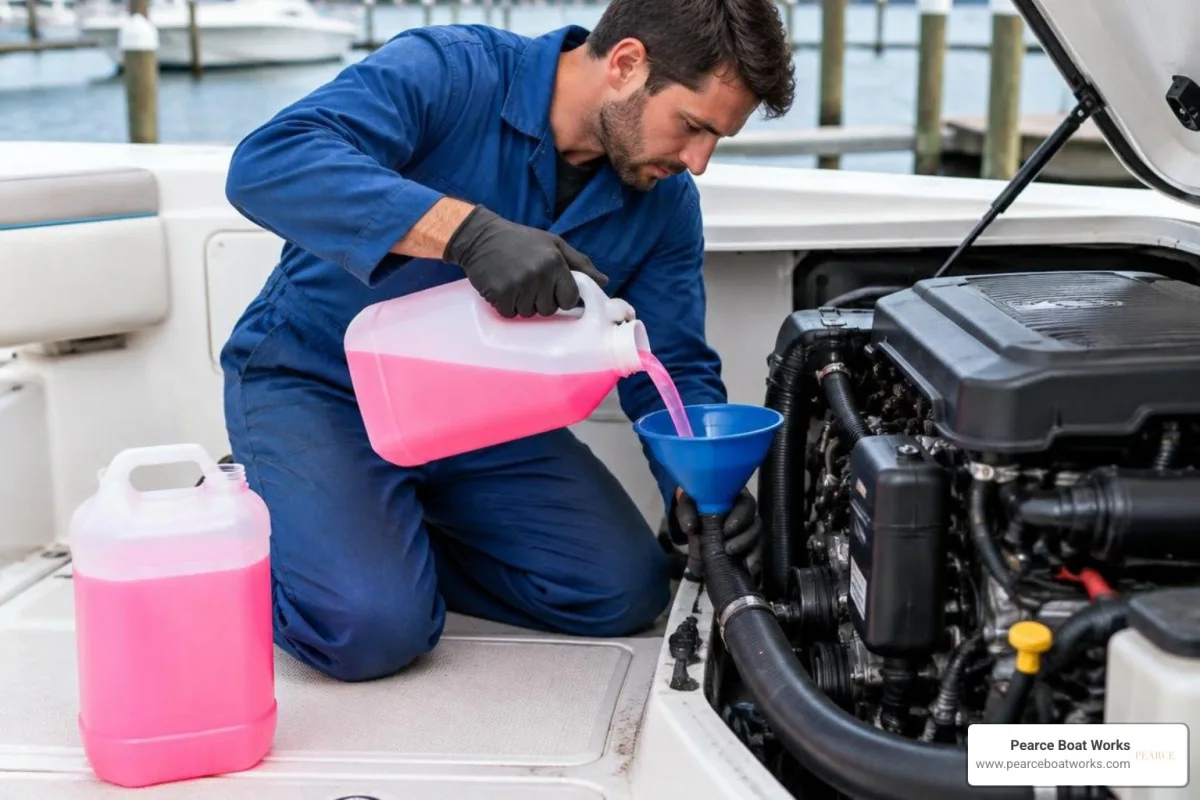
How to Flush Engine Blocks Using Boat Winterization Antifreeze
To ensure absolute protection, follow this professional master-mechanic procedure:
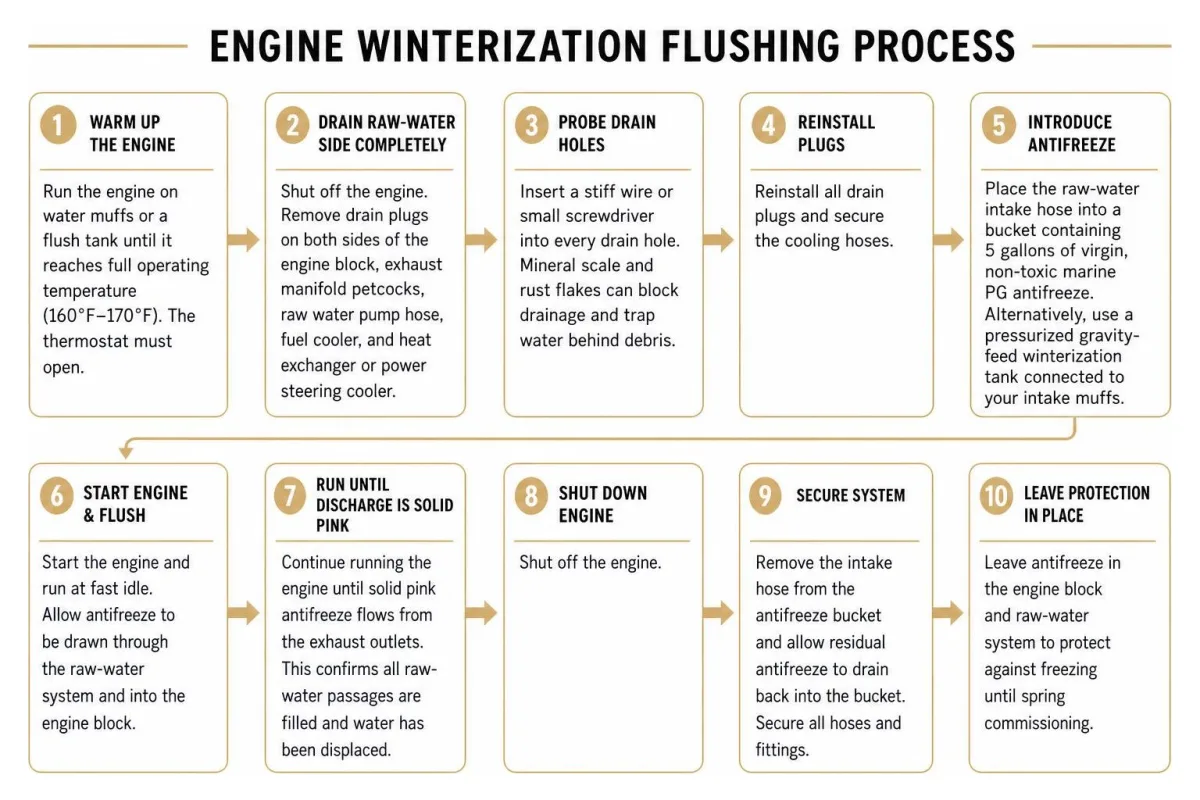
1. Warm Up the Engine: Run the engine on water muffs or a flush tank until it reaches full operating temperature \\(typically 160°F–170°F\\). The thermostat must open to allow fluid into the engine block cooling passages. 2. Drain the Raw-Water Side Completely: Shut off the engine. Locate and remove the brass drain plugs on both sides of the engine block, the exhaust manifold petcocks, the raw water pump hose, the fuel cooler, and the heat exchanger or power steering cooler. 3. Probe Drain Holes: Insert a stiff piece of wire or a small screwdriver into every drain hole. Mineral scale and rust flakes often settle at the bottom of water jackets, blocking drainage and trapping water behind a false plug of debris. 4. Reinstall Plugs: Reinstall all drain plugs and secure the cooling hoses. 5. Introduce Antifreeze: Place the raw-water intake hose into a bucket containing 5 gallons of virgin, non-toxic marine PG antifreeze. Alternatively, use a pressurized gravity-feed winterization tank connected to your intake muffs. 6. Run Until Saturated: Start the engine and run it at idle. Watch the exhaust ports. Continue pumping until pure, undiluted pink antifreeze flows heavily out of the exhaust ports. 7. Verify Safety Guidelines: Review BoatUS winterization safety guidelines for safe battery disconnection and fuel shutoff procedures during storage.
Draining vs. Antifreeze Retention and Eco-Friendly Disposal
A common question among boaters is: _Should I drain the engine after filling it with antifreeze, or leave the fluid inside?_
We strongly advocate for leaving the antifreeze inside the engine. While empty air pockets don't freeze, exposed raw cast iron rapidly develops surface rust and scale when exposed to ambient oxygen and moisture. Marine-grade propylene glycol contains corrosion inhibitors that coat the interior passages all winter.
When spring arrives, capture the flushed antifreeze using catchment containers rather than discharging it directly into the water or onto the ground. Even non-toxic PG consumes oxygen as it biodegrades, which can harm aquatic life in confined marina basins. Take spent fluids to an authorized municipal recycling or hazardous waste facility. For more seasonal maintenance tips, check our marine service blog.
Frequently Asked Questions About Marine Winterization
Can I use automotive or RV antifreeze in my boat's engine?
No. Automotive antifreeze uses toxic ethylene glycol and lacks the safe disposal profile needed for marine raw-water discharge. Cheap RV antifreeze often relies on alcohol/ethanol blends to achieve its freeze rating. Alcohol dries out neoprene raw-water pump impellers, degrades rubber flappers inside exhaust manifolds, and is combustible around engine compartments. Always use dedicated, non-toxic propylene glycol marine antifreeze with corrosion inhibitors.
Why does my -50°F antifreeze turn into slush in the freezer?
Household freezers operate around 0°F. A -50°F burst-rated propylene glycol fluid naturally begins to gel and form a slushy matrix between +10°F and +13°F. This is completely normal. The fluid does not expand as it crystallizes into slush, meaning it will not damage your plumbing or engine passages. Solid expansion only occurs if the temperature drops past the rated burst limit or if standing water diluted the mixture.
Should I drain the engine block after filling it with antifreeze?
No. Leaving high-quality marine antifreeze inside the block prevents internal corrosion, stops scale buildup, and keeps rubber internal gaskets supple. Draining the block exposes bare cast iron to moist air, causing heavy oxidation inside the cooling jackets.
Conclusion
Winterizing your vessel isn't just about covering the deck—it is a critical mechanical process that protects your powertrain and plumbing against severe freeze damage. By flushing raw-water circuits with quality propylene glycol, inspecting gearcases for water intrusion, swapping engine oil, and stabilizing fuel, you ensure a turn-key experience when warm weather returns.
If you prefer leaving your layup to certified professionals, the crew at Pearce Boat Works at Pearce Boat Works in Amityville, NY, is here to help. Our master mechanics provide comprehensive winterization, shrink-wrapping, systems preservation, and secure professional winter storage. Book your seasonal layup today to ensure your boat is protected all winter long.