How to Stabilize Boat Fuel for Winter Storage
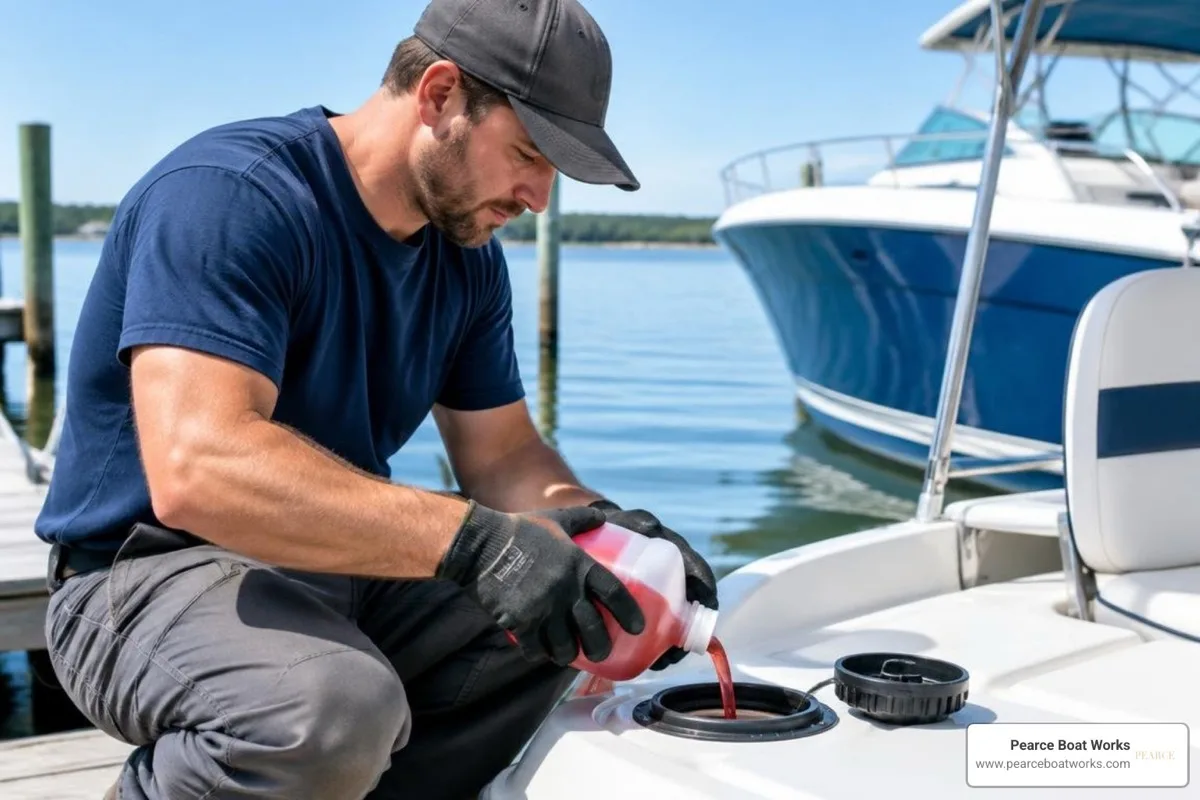
When adding a fuel stabilizer for winter storage, start with fresh fuel. Add the amount listed on the product label for the fuel in your boat's tank. Fill the tank to the level your boat's manual recommends, leaving room for fuel to expand. Then run the engine for about 5 to 10 minutes, or as directed by the engine maker, so treated fuel reaches the whole system. Only run a boat engine with the required cooling-water supply.
This small step can help prevent stale fuel and deposits that make spring starts harder. It matters even more with ethanol-blended gas, which can absorb water during storage. Stabilizer helps protect _fresh_ fuel; it cannot fix fuel that has already gone bad.
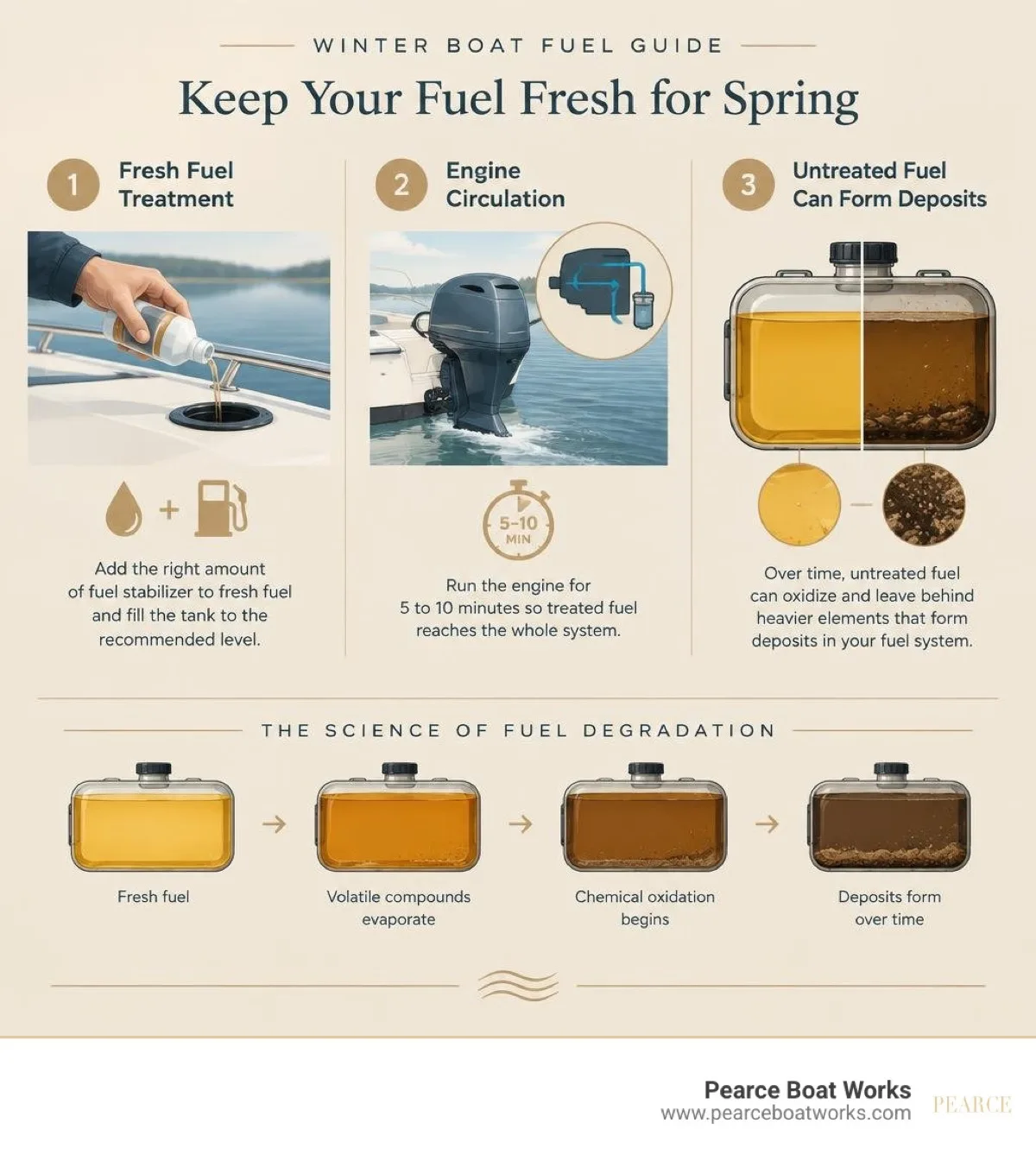
The Science of Fuel Degradation: Why Storage Damages Fuel Systems
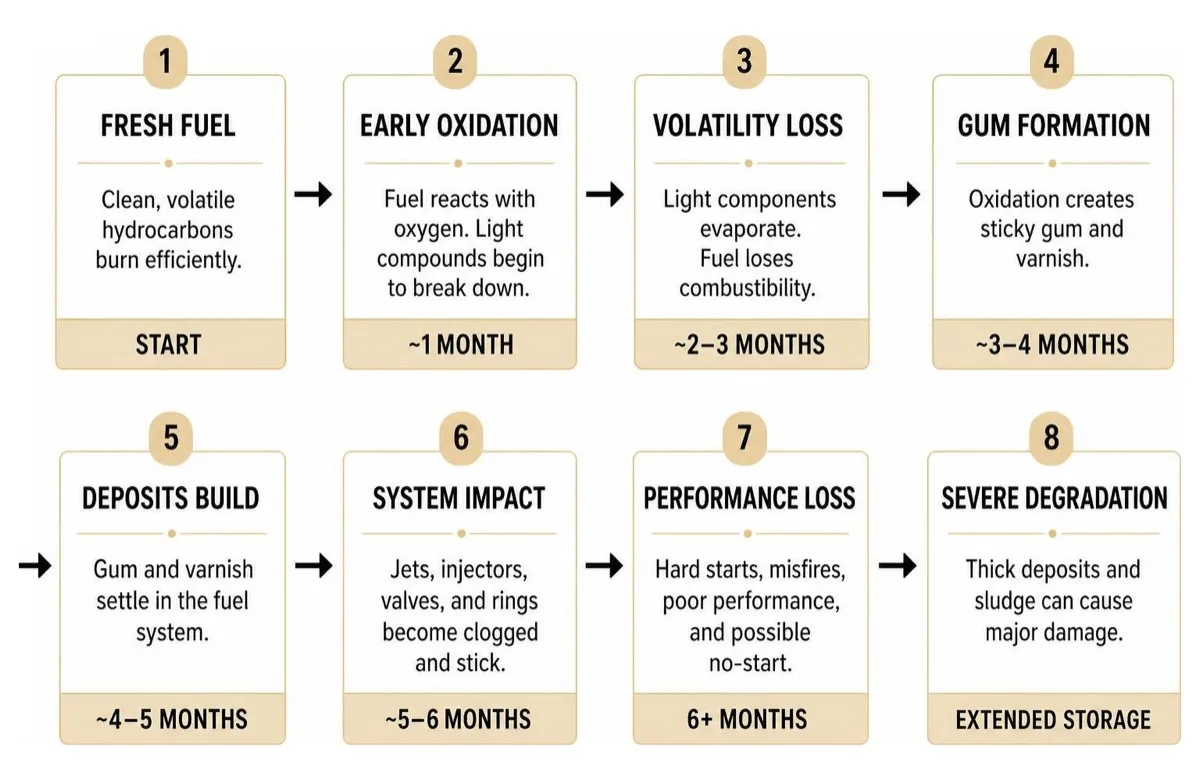
Gasoline might seem like a stable liquid, but it is actually a delicate, complex blend of volatile organic hydrocarbons. Left to sit in a tank, gas begins to spoil in as little as 30 days. As light chemical compounds evaporate, the fuel loses its combustibility \\(volatility loss\\), leaving behind heavier elements that break down through chemical oxidation.
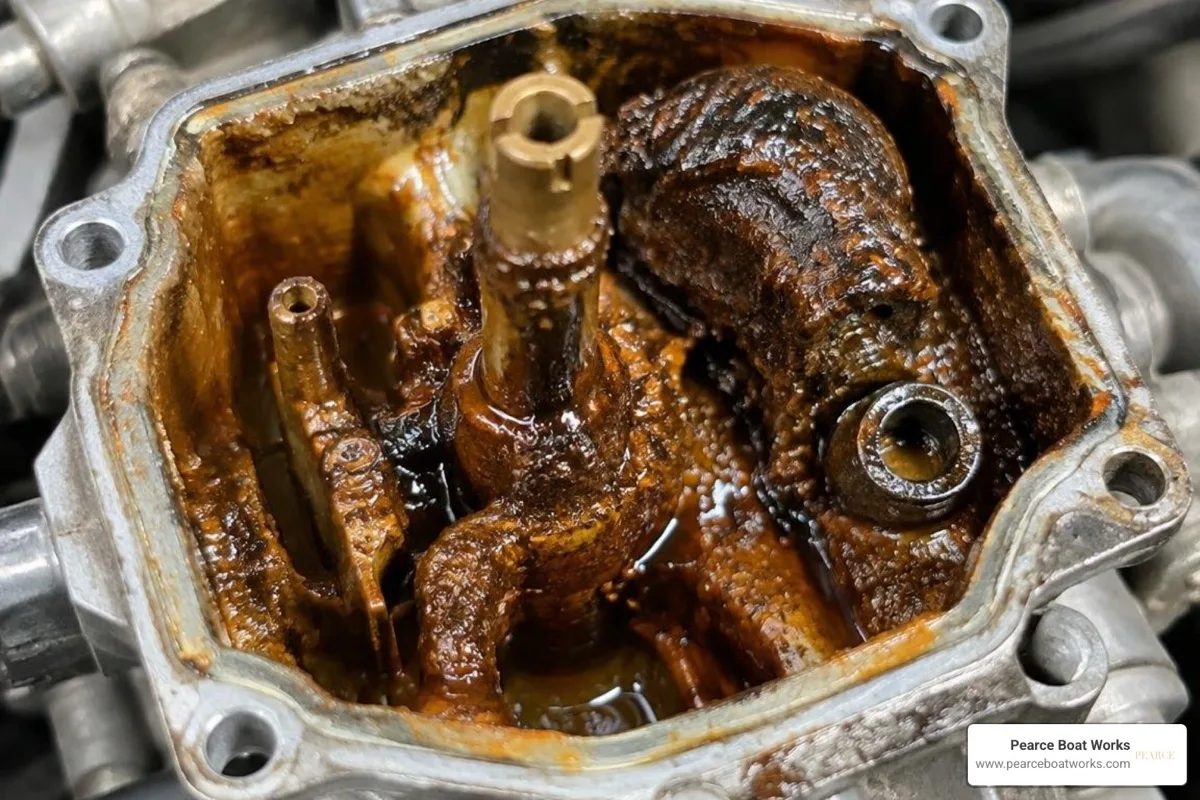
When fuel molecules react with oxygen in the air, they undergo a chain reaction. This chemical breakdown transforms clean liquid gasoline into thick, sticky gum and hardened amber varnish. These deposits settle throughout your fuel delivery system:
* Carburetor jets and passages: Clogged micro-orifices restrict fuel flow, causing lean runs, misfires, or no-start conditions. * Fuel injectors: Precision spray nozzles become caked with sticky residue, distorting fuel atomization. * Intake valves and piston rings: Sticky residues prevent smooth mechanical movement, leading to carbon build-up and compression loss.
Why You Need a Fuel Stabilizer for Winter Storage with Ethanol Blends
Modern pump gasoline contains up to 10% ethanol \\(E10\\). While ethanol helps emissions, it creates serious issues during extended storage due to its hygroscopic nature—meaning it actively pulls moisture straight out of ambient air.
Standard pure gasoline can sit for about 6 months before severe degradation sets in, but E10 blends begin degrading in as little as 3 months. Once fuel absorbs roughly 0.5% water by volume, it triggers phase separation : the water and ethanol chemically bond, drop out of suspension, and sink to the bottom of the fuel tank as an abrasive, non-combustible sludge.
If this layer reaches the fuel pickup, it starves your engine of octane, induces severe corrosion in metal tanks, and clogs delicate components like fuel pumps and injectors. Untreated ethanol can convert to varnish in 60 to 90 days, plugging expensive components like Vapor Separator Tanks \\(VST\\) and fuel rails.
Chemical Antioxidants vs. Phase Separation Inhibitors
Quality fuel treatments rely on a mix of chemical additives working together:
* Antioxidants: Interrupt the free-radical oxidation chain, preventing hydrocarbons from degrading into gum and varnish. * Metal Deactivators: Neutralize trace copper, brass, and iron ions that would otherwise act as catalysts to accelerate fuel breakdown. * Corrosion Inhibitors: Coat metallic fuel lines, tanks, and brass jets with a microscopic protective film to block rust. * Demulsifiers and Dispersants: Keep trace amounts of moisture safely suspended at a molecular level so they pass harmlessly through combustion without separating.
Step-by-Step: How to Use Fuel Stabilizer for Winter Storage
Treating your system before the cold sets in takes only a few minutes. Following these three practical steps ensures complete protection from the tank pickup to the combustion chamber.
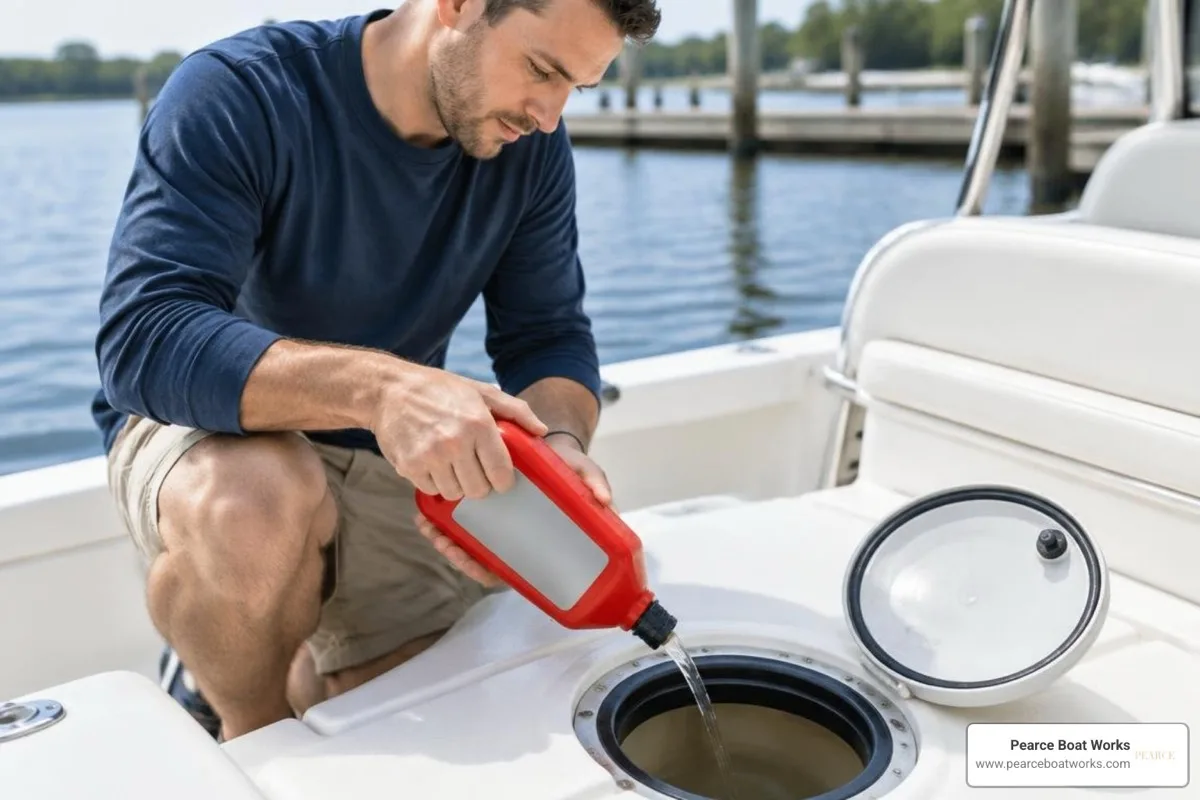
Step 1: Measure and Add the Correct Additive Ratio
Always read your product label, as treatment ratios vary widely. Standard consumer formulas \\(such as STA-BIL Storage\\) typically require 1 ounce per 2 to 2.5 gallons of fuel, while commercial concentrates \\(such as PRI-G\\) treat up to 16 gallons per ounce. Following equipment guidelines—which commonly suggest 1 ounce per 2 gallons—protects standard fuel systems for 12 to 24 months.
Add the measured stabilizer directly into the tank before pumping fuel. Pouring the additive first ensures that incoming fuel naturally churns and blends the chemical evenly throughout the tank.
Step 2: Fill the Tank to Limit Air Exposure
Fill the tank to roughly 95% capacity. Leaving 5% headroom accounts for natural thermal expansion during mild winter thaws while eliminating excess air headspace.
Air inside a fuel tank contains moisture that condenses against cold metal or plastic walls when temperatures swing between night and day. A full tank leaves almost no room for humid air, cutting off the source of water contamination.
Step 3: Run the Engine to Circulate Treated Fuel
Adding stabilizer to the tank protects only the fuel in that tank. If you shut down immediately, the untreated gasoline sitting inside your fuel pump, lines, filter housing, VST, or carburetor bowl will still oxidize and ruin your spring launch.
Connect your motor to a fresh water supply \\(using flushing muffs or an onboard flush port\\) and run it for 5 to 10 minutes at idle. This pulls the stabilized mixture through every line, sensor, and injector. If you are winterizing sterndrives or outboards, this is also the ideal time to run specialized fogging mixtures to coat internal components.
Winterizing Fuel Systems Across Different Engine Types
Every internal combustion engine needs winter fuel protection, but storage procedures vary depending on the machine. You can find more comprehensive off-season layup strategies in our winter storage guides.
Selecting the Best Fuel Stabilizer for Winter Storage by Fuel Type
Using the right chemical additive for your specific engine and fuel type avoids fuel system damage:
Stabilizer Type | Best Fuel Match | Typical Protection Period | Primary Function ---|---|---|--- Standard Storage Stabilizer | Regular unleaded gas \\(E10/E0\\) | 12 to 24 months | Halts oxidation and prevents gum/varnish build-up Marine-Grade Multi-System | E10 / High-moisture marine environments | 12 to 24 months | Heavy-duty corrosion inhibitors and phase-separation guards Enzyme Fuel Treatments | E10 / Ethanol blends | 12 to 24 months | Breaks down deposits and disperses micro-water droplets Diesel Fuel Conditioner | Ultra-Low Sulfur Diesel \\(ULSD\\) | 24 to 36 months | Prevents thermal breakdown, prevents gelling, and boosts cetane
Small Engine and Generator Protocols: Stabilize vs. Drain
For seasonal outdoor power equipment like lawn mowers, snow blowers, and portable generators, manufacturers often recommend distinct storage procedures depending on downtime:
* 1 to 3 Months \\(Short Term\\): Add stabilizer to fresh fuel, top off the tank, and run the engine for 10 minutes. * 3 to 12 Months \\(Medium Term\\): Add stabilizer, run the engine to circulate, then shut off the fuel petcock valve and drain the carburetor bowl using its drain screw. * 1+ Years \\(Long Term\\): Fully drain both the main fuel tank and carburetor to prevent stale fuel from damaging the system.
Marine Inboard and Outboard Fuel System Protection
Marine vessels face constant humidity and temperature swings on the water. Beyond adding stabilizer to the tank, follow these marine layup protocols:
1. Replace Water-Separating Filters: Spin on a new 10-micron fuel filter before layup to ensure no water sits against filter media over the winter. 2. Fog Carburetors and Intakes: Inject fogging oil through the air intake while running the stabilized fuel mix to coat internal cylinder walls and valve guides. 3. Inspect Anti-Siphon and Tank Vent Seals: Check that fuel vents have intact screens to keep pests and driven snow from entering the tank during outdoor storage. 4. Cover and Secure: Complete your seasonal maintenance and shrink wrap your boat to protect all engine systems and venting from wind-driven rain and snow.
Critical Mistakes to Avoid and Alternative Storage Strategies
* Treating Old Gasoline: Fuel stabilizers do not reverse degradation. If your gas is already yellowed, sour-smelling, or over 60 days old, adding stabilizer will not restore lost octane or dissolve formed gums. Drain old fuel and fill with fresh fuel before adding stabilizer. * Severe Overdosing: While modern stabilizers are safe for oxygen sensors and injectors, exceeding recommended dosages by more than 2x to 4x can increase spark plug fouling and leave sticky residue in carburetors. * Storing Tanks Half-Empty: A half-empty tank invites condensation cycles with every temperature swing. Keep tanks filled to 95% capacity with stabilized fuel. * Relying on Ethanol-Free Gas Without Stabilizer: While E0 gasoline does not attract water as quickly as E10, it still oxidizes and forms varnish after 6 months. Always treat ethanol-free fuel for seasonal storage. * Leaving Carburetor Bowls Wet and Untreated: If you don't run stabilized fuel through the engine, residual untreated gas inside tiny carburetor passages will dry into varnish, requiring a complete teardown in spring.
Frequently Asked Questions About Fuel Stabilizer Winter Storage
Can fuel stabilizer reverse fuel that has already gone bad?
No. Fuel stabilizers are preventative antioxidants, not restorative chemicals. Once hydrocarbons break down and volatile compounds evaporate, the chemical change is permanent. Spoiled, dark, or foul-smelling fuel must be pumped out, disposed of responsibly, and replaced with fresh gas.
How long does fuel stay fresh after adding a stabilizer?
Most standard consumer fuel stabilizers preserve fuel quality for 12 to 24 months. Specialized long-term treatments \\(such as VP Racing or PRI formulas\\) can extend shelf life up to 3 years under cool, stable storage conditions.
Is it better to leave the fuel tank full or empty during winter storage?
For marine vessels, vehicles, and equipment with built-in tanks, storing the tank 95% full with treated fuel is best. This minimizes internal surface exposure to humid air, stopping condensation and keeping internal gaskets from drying out. For small hand-held power tools with tiny carburetors, draining the system completely is usually preferred.
Ensure Trouble-Free Seasonal Performance
Properly treating your fuel system in the fall is the easiest way to prevent expensive repairs and enjoy turn-key starts when warm weather returns. Spending ten minutes adding stabilizer, filling your tank, and circulating the mix protects your engine throughout freezing temperatures.
For complete off-season peace of mind, our team in Amityville, NY is here to help. Explore our comprehensive marine maintenance and boat winter storage options to have your vessel winterized, wrapped, and mechanically prepared by master technicians.